Goiania

Today, we’re going to take a little excursion away from the realm of coffee and cold beer. I’m going to share one of the accidents I’ll be discussing with my students tonight. This is partially a matter of my marshaling my thoughts together for them. Ignoring Chernoybl & Fukushima, this remains the worst accident with radioactive materials in history.

NB: Yes, I am well aware that we killed plenty of people with Fat Man & Little Boy and that we have contaminated vast tracts of land with nuclear weapons testing. But one must remember, those were done intentionally. To a first approximation, we knew what we were doing and had taken appropriate precautions. Or, as one notable former Nevada Test Site employee said, “We never made the same mistake twice. Can’t think of many other institutions that can claim that.”

This story all began when a private cancer clinic with a nuclear medicine center shut down in Goiania, Brazil.  By 1987, much of the clinic was demolished but as derelict buildings in increasingly bad parts of town tend to go, it got a bad case of squatters.  Squatters are poor folk looking for any way to scrape by; one of those more popular ways is scavenging.  And what do most people scavenge: Metal.  Just ask your local homeless person with bags full of cans if you doubt me.  Why everything wasn’t gone when they shut down is a good question, but easy to answer: it wasn’t worth the effort.  What could easily be removed and/or be sold had been, what couldn’t they left, like the radiotherapy unit. Add in a side order of legal dispute about who was responsible for the unit and minimal regulatory oversight authority, and there you go.

Two hearty scavenging lads found this thing with lots of steel and aluminum in the clinic and thought they’d hit the jackpot.  The thought was doubly confirmed as they started tearing it apart and found this heavy metal bar with a goldish black window.  It felt much heavier that steel, and judging by the window, wow, that must mean gold.  So, they broke the window.  Within was a bluish glowing powder.  It wasn’t gold but they figured they could still get a couple bucks at the junkyard and that they did.

The owner of the junkyard thought it was beautiful and strange.  He thought it would make a great ring for his wife, Maria, so he set his workmen to task cracking the bar open and getting the pretty blue stuff out.  It was no easy task.  The found that inside the steel sheath was lead shielding containing an ampule filled with this metallic powder.

One yard worker died, the other lost an arm.  Despite taking what would otherwise be considered a very lethal dose, the owner lived.

After the workers got it free, they brought it back to their boss who then took it home.  His six year old daughter thought it was pretty and asked to play with it.  Being a doting father, how could he deny her?

Of all the people exposed in this incident, the daughter took the highest dose as she tended to eat her sandwiches on the same floor where she’d been playing with the source.  When she finally died a month later, she had to be buried in a lead lined concrete coffin.

Being social people, friends and family came over for a good extended family dinner.  The owner showed the blue powder to his brother who thought it was a miracle.  He asked for some, which his brother gave to him.  The brother went home and painted himself with the powder in the shape of cross, much like at Carnival, and then went out to work with the animals.

Everyone at the dinner party trailed contamination home with them and then to their families.  This is how the count of exposed people needing treatment rose to the hundreds.  Needless to say, the brother lost his arm…and all the contaminated livestock were slaughtered.  Luckily, none had gone to market before discovery of the incident.

When people started getting sick all at the same time, at first Maria started to think that she’d served some bad meat or juice.  She asked a local doctor if that made sense.  He said maybe.  Then she realized people who hadn’t been at the party were getting sick.  It occurred to her that it might be the blue stuff.  After the doctor sent her back home, she got progressively sicker.  Her mother moved in to care for her.

Both Maria and her mother died.

By the time Maria had brought the remains of the radiotherapy source to doctor, contaminating the bus she rode on in the process, 90% of the powdered metal had already been lost, spreading contamination through out the community.  According to Brookhaven National Laboratory, who originally made the Cs-137 cesium chloride source in 1971, it had an activity of approximately 1400 curies. Just for reference, the americium-241 source in your smoke detector contains less than 1 microcurie.  This radiotherapy source was, professionally speaking, motherfucking screaming hot.

This is not to say that comparing Cs-137 to Am-241 is apples to apples when discussing activity. At that point it becomes a matter of chemical characteristics and biological/environmental fate to determine exactly how dangerous a given isotope is for a given activity. However, I’ll have you know that this is a brown trousers time so hard your pants shoot across the room quantity of activity of Cs-137 from the safety point of view when there’s a loss of control. From a medical point of view, it was weak enough they probably couldn’t sell it off as a proper radiotherapy source anymore so they abandoned it.

Authorities learned of the loose source about a month after the scavengers first bust it open.  It took several more days for them to follow the trail back to community in Goiania and start getting people medical treatment; a couple more weeks to discover the full horrible extent of the contamination.  Only four people died, 54 people had exposures serious enough to merit hospitalization out of the 249 people found to be contaminated. This is of the 112,000 people that mobbed the public health officials & hospitals fearing they were going to have a horrible Hiroshima worthy death. It was wisely decided to move triage evaluation to the Olympic Stadium so that they could accommodate everyone, but it was still a nightmare processing everyone that was afraid. Several buildings were demolished and the top several feet of soil were removed as a part of the clean up, with an estimated 3500cu.yd. of contaminated material getting buried in a hole somewhere in Brazil.

As yet another a deeply tarnished silver lining, a lot of good health physics lessons were learned at Chernobyl (once international aid was invited to help with containment and cleanup) which, depending on your point of view, were fortunately/unfortunately put to excellent use at here.

I took a different lesson home when I first learned about this accident in detail several years ago: You Cannot Take ANY Knowledge For Granted. The radioactive source from the radiotherapy machine was prominently marked with the radiation trefoil but in this instance (and many, many others) it didn’t register with the victims in question that this denoted a hazard. This caused the IAEA to create a new ionizing radiation hazard symbol, a mishmash of somewhat familiar international symbols in hopes of scaring people off (skull & crossbones for “poison” and running guy with an arrow for “leave”) that has been called cluttered and confusing. My willfully obtuse reading of the new symbol to my old department chair was “Propeller wind causes pirates, go starboard”.

I think the root cause can be laid at a general lack of awareness/education about ionizing radiation. In First World countries, education has been lax though awareness is quite high, not necessarily in a good way as it is rather paranoid and poorly informed. Hell, I have a hard time getting nuclear engineering students to handle their rather benign sealed check sources. When items made in the First World end up lost downstream in the Third, a heavy price gets paid by the most vulnerable and least knowledgeable when control is weak or non-existent. There are dozens of reports of lost radiography sources at mines in the hinterlands all over the world being picked up because they were shiny and looked like silver (and thus valuable), taken home, and injuring the discoverer and/or their families. There are also far too many incidents of scrap yards like this one in Goiania receiving radioactive materials as metal salvage, reselling them and then tossing them into a smelter for recycling.

If I have any good news to share, it’s that the rate of incidents like this has decreased dramatically despite the increased use of materials worldwide. We’re getting better at playing with this particularly special kind of fire.

Put To The Question

It seems about time for me to answer another collected lot of questions, in no particular order or importance:

Question 1: “Seriously, what is it with you and volcanoes?”

Answer 1: As a physics undergrad at UC Santa Cruz, I worked in an isotope geochemistry laboratory (it’s a long story how I ended up there). I was trying to prove that what went down came up with respect to subduction zones and their associated volcanic arcs. This involved dissolving a lot of rocks and becoming very well acquainted with the work of the GLOMAR Challenger (the sister ship to the GLOMAR Explorer so gloriously featured in Charles Stross’ ‘The Jennifer Morgue‘) and the Deep Sea Drilling Program. I made a resolution in the course of this work to try to visit at least one active volcano a year. I’ve done better some years than others in keeping it.

The shorter answer is that I like explosions and the only thing on explosion on Earth that puts a nuclear blast to shame is a volcanic eruption. Incidentally, this is more or less the same answer that lead a former astrophysics professor to become a world renowned expert on supernovae (and I quote, “No bigger explosion in the universe, Phil. Not since the Big Bang”).

Question 2: “It would’ve been nice if you warned me about hot coffee & tea with my Stein of Science before a scalded the shit out of my tongue 30min after I poured it in and put the top on.”

Answer 2: That’s not much of question, now is it? Questions usually have question marks at the end. This is more a statement of thanks for the stein working properly. You’re welcome.

To let it cool down somewhat faster, leave the lid off. The steins keep cold things cold far better than they do at keeping hot things hot due to the convective heat loss from rising steam. Putting the lid on traps the steam in. Even leaving the lid off, it does tend to stay warm for quite a while.

Question 3: “So, the Stein 200 Surprise…any way I can know which one you’re on now?”

Answer 3: I bet you min/max when playing RPGs too instead of focusing on character development. Dang twinkers always trying to game the system. As a matter of fact, I’ve been updating the “Steins on Hand RIGHT NOW” pretty regularly to declare what I have lying around as opposed to entering the up to three week production window. Since I am currently on #194 and there are a five already built and numbered steins at the moment, we are somewhere between six and eleven steins away from the magic #200, depending on whether people order one that has already been numbered and built or not.

And yes, I will tell you which number you are getting when you order it. Happy?

Question 4: “Are you ever going to do any new coffees again?”

Answer 4: Maybe. Eventually. Currently expending a fair amount of effort keeping up with the demand for the varieties I’ve already made for you all. There’s only so much room and glassware to play with. Apparatus slated for production detracts from experimentation.

That said, Caffe Vita if you’re reading this, I would like a 50lbs sack of the Guatemala Mundo Nuvo if you ever get it again. I might even share some of it with the rest of you before destroying myself with BBotE made from their delights.

Question 5: “Can you tell us some more stories about THE DEADLY RADIATIONS?”

Answer 5: As a matter of fact, I will be giving a lecture about the Goiania accident and SL-1 tomorrow. I’ll see if I can muster some coherent thoughts on Goiania together to share for you all. Punchline: when you see glowing things, you’re first reaction should not to be to tattoo yourself with it, even if you do it in the name Jesus. It’s going to cost you an arm.

That’ll do for the moment. Back to work.

The Resurrected “Origins of Funranium”

People ask pretty regularly, “What the hell does Funranium mean, anyway?” Well, here’s your explanation. I don’t promise that it makes good sense however. Need to go find that “Guarantee of Insobriety” statement I wrote again…

Once upon a time, I was driving along Interstate 580 with a friend from college and was talking to her about the recent fun prospecting and camping I’d had with my family at the Lost Dutchman Mining Association claim in Duisenberg (nearest town is Randsburg, CA).  Duisenberg was a gold camp in the middle of the Mojave Desert mining the caliche deposits.  Imagine, if you will, a thin limestone crust of false bedrock at varying depths throughout the Mojave with gold lying on top of it due to erosion of the nearby monazite quartz deposit.

Monazite is a mineral that rang a bell with me as both a frustrated geologist and a radiation safety professional.  I recognized it for two reasons: 1) It’s why the pretty purple quartz that makes the beaches of Kerala, India so beautiful, and 2) It’s purple because it is a thorium/uranium rich earth that gives Kerala a natural background dose rate roughly two orders of magnitudes higher than average sea level USA.  You see, gold, silver, platinum, thorium, and uranium are alike in that the preferentially taken up by water and deposited as veins in rock.  In the igneous petrology game, they are known as chemical incompatibles when it comes to the magma; if there is an available solvent to take them, like water, the metals will go there rather than form minerals.  It should come as no surprise that during the Uranium Rush of the late 1940s and early 1950s that the Mojave was home to several uranium strikes.

While laying all this out to my friend, I had a revelation:

1) Camping is fun.
2) Properly prepared, the desert is fun.
3) People like booze.
4) People like gold.
5) Small scale prospecting for thorium and uranium should be substantially similar to that used for gold (i.e. panning and dry rocker)
6) Unlike gold, a handheld meter can easily determine if you’ve found something radioactive.

In mathematical form: desert camping + prospecting for thorium/uranium + booze = AWESOME

On reflection, I realized that the combination of hooch with rough camp prospecting is about as traditional a post-1849 California activity as you can get.  All that’s missing from this equation is camp followers and guns.  However, this is how I envision my brand of fun:

The group will set out for the camp in one or two vans (depending on group size) to accommodate people and supplies.  On arrival at camp, tents will be set up and instructions on dry panning will be given with the intention to wash down concentrates accumulated in the field on a water recycling rocker at camp.   The intrepid souls will be issued map, GPS, panning equipment, radio, a bottle of their favorite booze (my personal preference being the creations of St. George Spirits), and 4L of water.  They will then set out looking to make their strike now that they know how to find that sweet spot on the caliche layer.  They could, alternatively, have a nice hike and/or stagger around the claim with a bottle of whiskey in hand.  At night delicious meats will be grilled while what concentrates have been accumulated by the prospectors are further concentrated by the rocker.  Then, before bed, I will take my meter to the concentrate, assay the materials for activity and give everyone their very own vial of the day’s thorium/uranium to cuddle with through the cold desert night.

Folks, that is Funranium.

If you are interested in having me arrange a Funranium Expedition*, it is possible that I could be convinced to take the time off work. (UPDATE: AHAHAHAHA, no, as if I have that much free time ever) Obviously, I’ll have to make all intrepid souls sign a waiver or some such; anything as patently foolish as wandering in the desert with booze in hand is something insurance companies and lawyers want no part of.  It’s quite obvious the rise and dominance of the insurance industry is a recent manifestation, because the Gold Rush and Westward Expansion wouldn’t have worked if liability coverage and deductible had been a part of it.


* You will have to provide your own camp followers and guns if you want a more authentic prospecting experience.

Testing Dispatches: College Station, TX

It is possible that in addition to the Pimp & Pimpstress of HAL Laboratories (AKA Champaign-Urbana, IL)  you may soon have one down by Texas A&M as well. That is, assuming certain coffee-cultural hurdles can be passed. I share with you the tale of Test Subject Jason and his attempts to share BBotE:

I made a flyer at work so I did not have to explain each time what this “mixture in the fridge” was to the 8 or so co-workers each time. The inside large text motivates everyone to read, so I know that is working or, at the very least, saving me time explaining. I work in a small well educated town, everyone I work with has a college degree…but getting  co-workers to try “pre made” coffee was a challenge in itself. Work feedback thus far:
Subject Nina: 40’s 110lbs female; 2 tables spoons of Kona in hot water, only able to drink half a cup before she said “her blood felt like it was trying to get out of her skin” I marked that as a Success :)
Subject Tim: 40’s 165lbs male: around 100ml Kona in hot water and stated he really could tell the subtle differences in this vs. regular coffee.
Subject X: 50’s 140lbs male: shows me his arm, wraps an imaginary rubber band around it, taps his veins, and says “I don’t want to get addicted”.
“New fangled” coffee appears not to be as exciting as I find it. Go figure.

If you are down in College Station and wish to prevail upon Jason’s kindness for a taste, he may be willing to share with you. Drop him a line at aggie[at]funraniumlabs[dot]com. I hear he is partial to bribery with beer as well.

Scientific Drinking Tour 2011, Further Updates

Travel dates are firming up. Currently, Las Vegas, NV and Fairbanks, AK are guaranteed to be graced by my presence. This is a chance to get a Stein of Science or Black Blood of the Earth in person (thus negating the shipping fees), learn the mysteries for the master, and consume beer & endless trivia with Herr Direktor Funranium & his Lovely Assistant. Without further ado, the itinerary as it stands:

April 1st-3rd: Las Vegas, NV CONFIRMED (it is a certain Lovely Assistant’s birthday)

Late April-Early May…ish: Las Vegas, NV (yes, Vegas again, a TBD bachelor party of SCIENCE!)

May 12th-17th: Fairbanks, AK CONFIRMED

June 2nd-19th: Washington DC, New York City, and Upstate NY (still working on this, but by Crom I want some Smithsonian)

August  17th-21st: Reno, NV (CONFIRMED. Yes, that is Worldcon 2011)

There has been some muttering about shenanigans in Portland, OR and a wedding in Grand Junction, CO but that all remains TBD. You want a piece of my time while I’m in any of these places, drop me a line.

Approaching Stein #200

So, much as I celebrated Steins of Science #1 and #100, I must observe the amazing fact that there are nearly 200 people out there that know how much fun it is to drink out of one of these. Thus I make a declaration:

Whoever purchases Stein #200, whatever variety or size that be, shall also receive Stein #201, a 665ml FMJ, for free. That’s right…a complimentary stein.

The current construction number is sitting on #192 with a six already built with earlier numbers.

I return you to your regularly scheduled programming with the thought that “I could be the one…” gnawing at your mind.

Antarctic Lifestyle Challenge

The questions the first graders at Redwood Elementary School asked me had two major themes:

  1. Tell us about how you can die horribly and not be rescued. Add situational complications to make it harder for me to rescue the poor Antarctican
  2. Do you have/can you take *INSERT ITEM HERE* to Antarctica?

For the latter, I presented them with a challenge. It’s the same challenge every member of the United States Antarctic Program is presented with before they deploy: how can I reduce my life to 150lbs? Not 100 items, not 8cu.ft., but 150lbs. Yes, they do weigh you before you get on the the flight for Antarctica.

I suspect tonight there are 20 first graders that are going to be piling their possessions onto the bathroom scale much to their parents’ confusion. Go ahead and give it a try. Might encourage you to buy a Macbook Air if you really need a computer.

You get 150lbs of Important Things. It would be nice if it all fit in two suitcases and a carry on, but I’m not feeling too picky about that. Alright…GO!

Fare Thee Well, Greg Yuhas

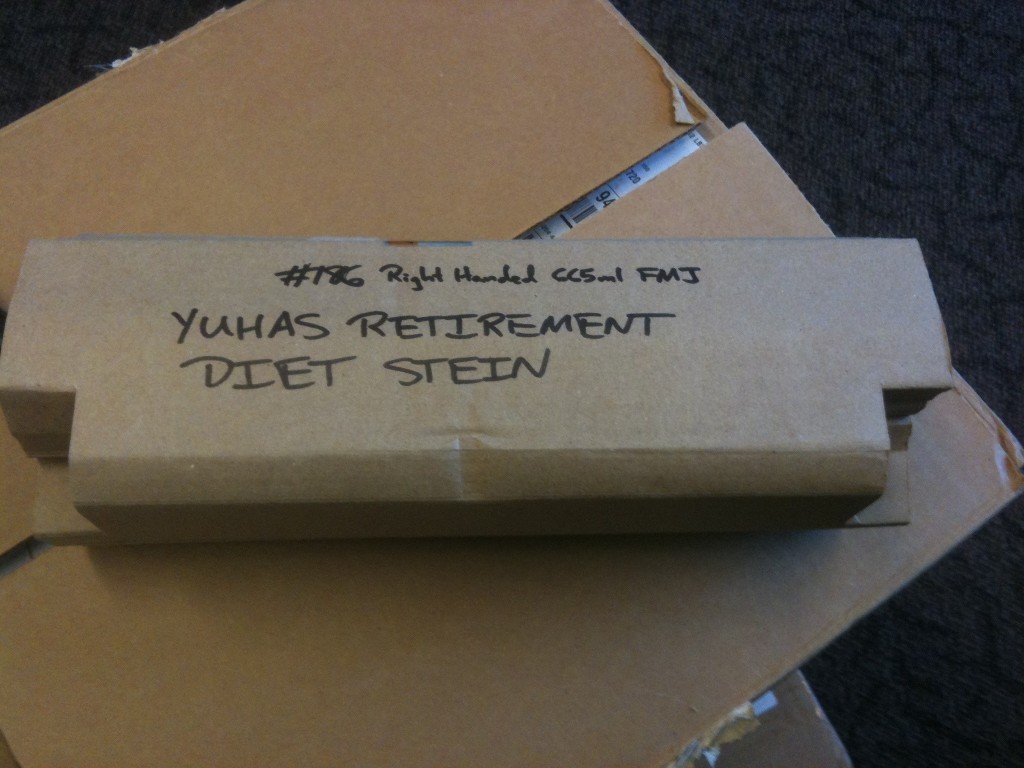
Tomorrow, UC Berkeley’s Radiation Safety Officer embarks on his retirement from that fine institution. His tenure here has been marked by the a quantum leap improvement in the programs and compliance for work with radioactive materials & radiation producing machines. When he arrived, UC Berkeley was an object of derision in the academic community for the condition our program; as he leaves, we are held up as an example to others for what you can achieve when you really care, and are willing to roll up your shirtsleeves and get dirty. I have never seen Mr. Yuhas more happy than when he was picking through garbage in a dumpster, smiling with glee, and surveying away with his Geiger counter after someone tossed something they shouldn’t have.

He’s served with the US Navy, Lawrence Livermore National Laboratory, the Nuclear Regulatory Commission, the International Atomic Energy Agency, and somehow we were lucky enough at UC Berkeley to get some time with him steering us right. Working with him has been a pleasure and an education. Someday, I will share a tale from his career as a young regulator entitled “The Man from NRC and the Seagull” as it is pure comedy gold.

And so, I share his retirement gift from all of us that have worked with him because we will miss his Papa Smurf looks and evil cackle when something goes wrong. If the Retirement Diet is one of pure beer, or if it is less beer but enjoyed over a much longer, well-chilled period on the Sacramento Delta, he is now well set. Of course, I’ll be really surprised if he stays retired for any length of time. Via con cerveza, Greg Yuhas.

The Yuhas Retirement Diet Stein
#186 - The Yuhas Retirement Diet Stein

Drinking To Columbia – An Antarctic Tale

EDIT: Today is February 1st, 2013, which makes it the 10th anniversary of this event. Raise a glass, won’t you, to the High Frontier.

This tale is prompted by hearing a familiar voice on the radio speaking to some elementary school students. One I hadn’t heard in eight years since a rather grim alcohol soaked day at McMurdo Station, Ms. Cady Coleman, Astronaut. She is currently serving aboard the International Space Station.

As previously discussed, I spent a year in Antarctica at Amundsen-Scott South Pole Station. We winterovers were entitled to some R&R during the summer before the full “The Shining”-grade lockdown for 9 months set in at Pole. But did they send us to Tahiti to enjoy warmth, greenery, and mai tais? Noooooo…they used to send folks to New Zealand but there was a bad spate of people skipping on their contracts now that they’d already endured three months of The Ice. By the time my year hit, people at Pole got sent for a week in beautiful, comparatively tropical, McMurdo Base. I got stuck there an additional two weeks waiting for a supply ship to offload.

Too much happened in this total of three weeks and much of it was spent drunk or short of sleep for me to hope to get all in one go.  For the time being, let us discuss Room 129 in Building 155. Eleven of us went on R&R at the same time in mid-January 2003. Six of us were in Room 105, where I was put, and the rest were in 129. Sadly, the occupants of my room were focused on sleeping and reading. The other room had a strict schedule that went something like this:

1100 – Wake up.
1101 – Pour yesterday’s burnt coffee into trash can, or other room occupant’s boots as the muse demands.
1102 – Turn on coffee pot. (coffee pots in rooms are against the McMurdo rules)
1107 – Pour coffee. Add Irish Creme and whiskey to greet the McMurdo morning properly. Repeat as necessary.
1130 – Stack previous night’s beer cans and liquor bottles onto the growing pyramid.
1200 – Lunch. Offend sensitive McMurdans.
1300 – Day Bar at Southern Exposure*.
1730 – Dinner. Offend sensitive McMurdans.
1830 – Night Bar at Southern Exposure*.
0030 – Midrats (“midnight rations”, McMurdo had a specific list of people allowed to eat at this time which we ignored). Assemble bar on the dining room table. Offend sensitive McMurdans
0130 – Room party or lounge shenannigans.
0400 to 0700 – Go to sleep, maybe.

You can take you guess as to which group I spent the most time with.

*: For reference, Southern Exposure is also known as The Smoking Bar. Once upon a time it had been the Chief’s Bar during the Navy days. There were two other outlets for booze, The Coffeehouse (formerly the Officer’s Club, a very old quansit hut), and Gallagher’s, AKA The Non-Smoking Bar (formerly the Erebus Club, the enlisted men’s club, renamed after the death of CPO Gallagher (ret.) who died on Ice in 1997).

I seem to be digressing. Let’s take the story to February 1st, 2003 standing in the main entryway to McMurdo’s primary building, Bldg 155, with NASA astronauts Eileen Collins and Cady Coleman. I’d gotten to help them move their remote campsite a few weeks earlier as they were doing meteorite collection on the ice sheet by the Pecora Hills. I have no problem whatsoever being menial labor on the endless frozen expanse when I get to hangout with astronauts. Hell, I moved their bucket toilet with glee and sat there for three hours in the cold waiting for a plane to take me back to safety.

Both Cady & Eileen had been on previous space shuttle flights. Eileen, in fact, had been the first female pilot the shuttle had ever had. There was some concern of damage to the shuttle for reentry. Thus, they were watching the Armed Forces Television monitors with rapt interest and sharing small tales of the awesome of going to space. Being the science nerd and child of Cape Canaveral I am, I was hanging on every word.

Then Columbia exploded.

There was a a sharp intake of breath from the dozen or so assembled. One of the construction folks screamed “NO!” at the top of her lungs.

I turned to Cady and said, “I have a bar worth of booze in my room if you’d like a drink RIGHT NOW.” She and Eileen slowly nodded, looking rather shellshocked. They’d just watched their co-workers die. No, more than that, these are the people you have been studying with, sweating in the gym with, and trapped in various spam cans with for years. Being an astronaut is somewhere between army platoon and tightly knit doctoral program group. These were more than co-workers or friends; they were fellow explorers on the frontier.

I would like to state for the record that it is rather hard to drink me under the table. I have survived evenings with naval personnel from several countries, a misadventure with a watch worth of Coasties, hard rock miners, gutter punks and emerged staggering tall (albeit holding The Plunger of Honor one time…long story, don’t ask). However, these two women had me holding on to the pool table for support as they kept clearing it with deadeye accuracy and taking more and more shots of gin. Commander Collins is 5’1″ and almost didn’t get to be an astronaut due to a space program worth of suits designed with the six footer John Glenn in mind. I doubt she said “Fuck you very much, NASA” but she did make sure that a suit was available to fit her by becoming part of the suit design project.

At the end of it all, Cady asked if I’d like to see the video she took on the shuttle. Her personal camera. That may have been the high point of my Antarctic experience.

To Cady, Eileen, and all the astro/cosmo/taikonauts, I wish you the very best as you keep humanity’s future in the stars going forward. To the names on the memorial at Kennedy Space Center, and all the others that have lost their lives as we try to escape the gravity well, I raise a glass.

Continued Domination Of Global Media

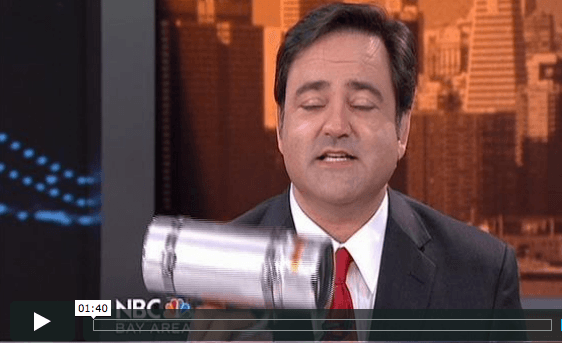
This morning, in the dark, dark hours of the pre-commute day the crew at KNTV 11 decided to play with one of the 665ml FMJ Steins of Science as part of their Super Bowl Gadgets. I know they showed filling it with bottles of orange juice, but the level of jocularity suggests that they might have taken it for a test drive with something of a more medicinal nature beforehand. Enjoy!

KNTV 11 Plays With A 665ml FMJ

“Don’t drink out of it”…BAH! Lies and poppycock. You are drinking responsibly and forewarned knowing that you are using scientific apparatus for purposes other than originally intended, purposes which it happens to do quite well.

Funranium Labs, Iteration V (and The Bug Hunt)

I have many times pointed out that it is good for a man to know his strengths and weakness (as opposed to vices, which should be indulged). When you have a recognized weakness you could work ridiculously hard to better yourself to the point that it no longer is. Or, you could ask someone who is more competent than your concussed llama-like skills for help. This is why Funranium Labs has not one but two helpful webmonkeys that point out the stupider things I do and ask if I’d like them to try to fix things for a modicum of BBotE. Once again, thank you Brad & Jason.

The solution to cope with Warren Ellis-grade levels of interest was to split the store and blog into two separate, though connected, entities. On a positive note, the new store build has a much more savvy shipping module that can cope with international addresses with grace and aplomb. Additionally, it will do REAL shipping costs. This means for most people, shipping cost have actually gone down, particularly in California.

While I have gone through and done a fair bit of broken link cleaning and checkout testing, I am by no means willing to claim that it is bulletproof. If that were the case, we wouldn’t be on Iteration V, now would we? To this end, I am issuing a bounty. If you run into a bug that prevents you from making an order, please write it up and send it my way (preferably with screenshots). If you are the first person to report that bug, I will knock $5 off your order.

That said, please don’t actively hack the site to create new bugs. There’s plenty to go around, I’m sure. While Google enjoys caffeine as much as anyone, the pool o’ money to payout for bugs here at Funranium Labs is comparatively small.

Alright, I’ve said my piece. Enjoy the new build, I welcome feedback and do your worst.

Weatherpocalypse Delays & Ordering Problems

EDIT: Iteration V is already here! Moo Hoo Ha Ha!

Do you live somewhere in North America that isn’t north of Tuscon, AZ? How about Australia, somewhere that isn’t about to be consumed by a megacyclone with wind so hard we’ll be picking wallabies out of the Himalayas? In that case, you are probably enjoying a quiet life of reasonable weather.

What I’m getting at is there is some extenuating circumstances that might cause a titch of delaw shipping right now to some locations. Steins of Science will go out just to get them in the pipe, but I may hold BBotE orders to make sure that they don’t end up frozen in the back of an abandoned semi somewhere  in East Flatness-on-Nothing, Nebraska.

In other news, the kind words of Warren Ellis are sufficient to blast pretty much any server into hot metal vapor and Funranium Labs is no exception. We’re doing our best to put Humpty back together again (perhaps with a bigger schnoz) but the Checkout module continues to be persnickety. Right now, the easiest way to place an order without hitting the shopping cart reset bug is to go to the product scroll bar at the top and press the “+” on the pictures. Worse come to worse, you can always drop me a line with “Contact Us” and I’ll figure out a way to backdoor you your stein or BBotE.

It’s not a perfect solution, but it will do until we (by which I mean the highly competent webmonkeys that work for caffeine and not my inept self) roll out Iteration V of the website which, hopefully, will be very soon and Ellis-proof.

The Lupercalia Coupon

As I did last year in hopes for a return to traditional Roman values of debauchery for Lupercalia, I declare a 10% off coupon running from now through March 17th. In this way, I can capture a variety of holidays of excess all under one banner: Super Bowl XLV, Carnivale/Mardi Gras, and the modern observance of St. Patricks’ Day.

Your code to use at checkout is “WOLFSHIRT”. Go forth & consume.

warrenellis.com GUEST INFORMANT Piece

This was originally posted on warrenellis.com as a GUEST INFORMANT piece and grew out of thoughts/worries from Las Vegas (Part 2). I would like to thank Warren for this chance to shout into the darkness, in hopes that someone in Britain will take an interest in their secret history and try to preserve some of it like the Atomic Testing Museum is.

NB: I used to work at a nuclear weapons laboratory, but don’t anymore. I held a “Q” clearance but, as you’ll read below, those responsibilities never end.

The problem with asking about a “secret history” is that people immediately think you are a whackadoo hell bent on conspiracy theories and just hoping, pleading, and praying to be anal probed by aliens. But we do have secret history and are making more of it every day, courtesy of the way various governments classify information. My particular interest is in the history of the global nuclear weapons programs and you’re going to have to bear with me because there’s a lot of acronyms to cope with in the Land of the Classified. Here is quick primer on classification in the American system:

We have two different tiers of classification: Restricted Data (RD), AKA nuclear secrets, and everything else. The normal classification procedure involves the review of the information and then decision if it needs to be classified into the familiar Confidential, Secret (S), Top Secret (TS), etc. categories. For normal materials, it is presumed public information until someone reviews it and gives it a classification. This classified information will, in time, automatically declassify as expiration dates hit, unless someone renews their classification. For example, every soldiers’ WWII military records were classified and automatically became public in 25 years, although my grandfather’s war record has received a 25 year extension…twice.

Not so with nuclear secrets. They are “born secret” and must be reviewed to be declassified. There are no expiration dates on nuclear secrets. The two clearances that allow the use of Restricted Data are the Department of Energy’s “L’” and “Q” clearances. They may be considered as offset and slightly higher versions of Secret & Top Secret, except that they permit the access to RD. One of the problems with trying to piece together history related to nuclear secrets is that they suffer something of a contagion theory; things that normally would be completely pedestrian information, such as a phonebook, become Official Use Only (OUO) because it holds a list of names and phone numbers of people who hold L & Q clearances. State Department documents that might reference the nuclear ambitions of another nation suddenly become cross-classified with a L or Q clearance.

This also means that people who have L & Q clearances are “Informed Individuals”. With what they already know that is classified, they are capable of thinking entirely new, instantly classified thoughts and to speak them out loud in an uncleared area or to uncleared people is a felony. So, yes, it is possible to commit Thoughtcrime. In light of that, it should make sense that workers in the nuclear complex tend to work very long hours and stay long past retirement age. Inside the gate is the only place they are free to think and talk. Outside the gate they have to constantly guard themselves from accidentally thinking the wrong thing out loud. My very favorite cold warrior comes of as a bit of an airhead in public, because the only thing she feels safe in discussing are interior decorating and clothes. This self-censoring doesn’t end once you leave and no longer have an active clearance. You know what you know, but now you have nowhere to go to discuss it. The obligations of a Department of Energy clearance are for life.

Now, with that out of the way…

I just took a trip to the Atomic Testing Museum in Las Vegas, NV, took in all the exhibits and had the pleasure of meeting an 83 year old retiree from the Nevada Test Site. Reading/listening to the interviews sends a very clear message that the Nevada desert is where the American front of Cold War was waged, one nuclear blast at a time, in the opinion of the former Test Site workers. To people that haven’t worked in the nuclear weapons complex, this may sound strident and reactionary. I know it felt a bit wrong hearing it all and that’s me talking. I was only at Lawrence Livermore National Laboratory for three years and change, but I spent a lot of time talking with and listening to the older workers and retirees (decontamination of facilities is sometimes like doing an oral history project with people who worked there, starting with “I just need to know what you did so I know what danger I might be in”). The Q cleared workers of the Department of Energy carry a very heavy burden that they can never put down, even the former janitors. They have been entrusted with the nuclear secrets of the nation and you’d be surprised how informative very peripheral information, like frequency of trash collection, can be. For this reason, they aren’t free to speak…EVER.You disappear behind the Q and cease to be an individual, you are part of the complex.

They’re used to a sizable population that hates the work they do, but they aren’t allowed to defend their work to the public. On the flip side, they are used to their lives and research being guided by the budgeting whims of elected officials and appointees that, typically, have very little scientific literacy and operate on election timetables. It is funny how the Cold Warriors I used to enjoy talking to felt that while Soviet designers had been their competition, it was Capitol Hill was the actual enemy of Science. A few former Soviet researchers I’ve spoken to said they felt the same way about the American designers and the Kremlin. While Reagan called the national labs “The Arsenal of Freedom”, they never felt particularly held in esteem. The budgets and executive actions deeply at odds with the rhetoric in George W. Bush’s administration was a matter of doublethink that alienated the career workers of the complex further. With all that in mind, this helps inform the proud siege mentality I find many weapons complex workers to have.

It is also important to remember that weapons work is not the only thing they do. In fact, a majority of the Q cleared workers have nothing to do with weapons whatsoever. Just as it was in my time in Antarctica, for every researcher there are at least eight other people there who make their work possible because you certainly don’t want people like me doing carpentry. Only the most arrogant PhD or callous bureaucrat would fail to acknowledge all the other people working to make the national labs a success. Research grinds to a halt when the toilets don’t work, you know?

But then I got to thinking about about countries beyond America, in particular, the United Kingdom and how their workers weathered the shifting political tides, shrinking budgets, and anti-intellectual fervor. For example, I find it hard to believe that in ’70s that there was never an attempt to make a “nuclear union” in the pre-Thatcher era. The tradesmen that work in the weapons program and nuclear power plants in America may belong to their own individual trade unions, but not as a union of workers in nuclear industry.

Something we often gloss over in the history of the Manhattan Project is how many non-Americans contributed to it. Part of the reason this is easy to do is that many of the scientists naturalized and became American citizens, but some didn’t and went back to their home countries after the war. The United Kingdom, in particular, sent it’s researchers to contribute to 1) get them out of England, and 2) hopefully make something that would give Jerry a jolly good thrashing, with agreements of research sharing made in 1943 & ’44. In 1946, with the signature of the Atomic Energy Act and creation of the Restricted Data clearances, all those foreign nationals were sent home with out so much as a scrap of paper for all the work they’d done in Los Alamos.

This, understandably, caused a bit of diplomatic rift between the Washington and London. The subsequent, brusquely denied, request for America to honor their agreements lead to the creation of British nuclear weapons program on a thousand pieces of scrap paper as the scientists were order to reconstitute what they’d done during the Manhattan Project, almost out of spite per Prime Minister Attlee’s papers. They then went from scribbles to a functioning weapons test in about five years, which is damn impressive considering the much more limited resources & manpower of post-war Britain. Some of this story is captured in the novel Spycatcher by Peter Wright, which was banned in Britain at one point…ensuring it’s commercial success.

The British nuclear weapons program has always been small and accustomed to making do with very little, as opposed to the American program who had a hard time spending all the money thrown at them through the 60s & 70s. Where the American workers felt besieged by public and increasingly alienated from the government that employed them, it is hard to get a sense of the experience in other countries. I imagine that Thatcher’s England would have been a close analog to Reagan’s America, but the staggering shifts to the educational system must have had some reflection in the nuclear complex. Subsequent governments don’t seem like they would have been terribly supportive either. What was it like to work there? What projects have we forgotten about because they never hit prime time outside of the gates?

And it is these stories that I would like to reclaim. This is the secret history we are losing as the retirees die, keeping their oaths to the grave. The Atomic Testing Museum and DOE Nevada Site Office are trying to save a small fragment of it but there is so much more out there in the world. The lessons of the “small” British and French programs may be more instructive for the future of arms control than studying America and the Soviet Union’s.

Phil Broughton, 27 January 2011
(AKA Herr Direktor Funranium)

Las Vegas (Part 2): The Atomic Testing Museum, NERVA, and SL-1

Part 1 of the Las Vegas Adventures can be found here.

If you are in Las Vegas, go to the Atomic Testing Museum. As much fun as gambling and debauchery are, make the time to head out to UNLV and visit. Getting a chance to visit the Trinity Test Site or one of the rare tours of the Nevada Test Site (NTS) is once in a lifetime event for most non-weapons complex employees, but this museum is there every day. Give yourself at least three hours if you really want to take the time to read everything they’ve put on display. And if any of the NTS retirees who are now docents are there, sit down and listen. It is as simple as that. Make the time as if you were listening to a WWII vet talking about landing in Normandy or Okinawa.

My apology for this post is that photography is prohibited in the Atomic Testing Museum, so no pictures. However, the Department of Energy Nevada Site Office has released some amazing photo collections from the testing days, along with current operations, and I definitely recommend wandering through them. Hell, we used to have a movie studio/military base in LA devoted to making films and photos from testing. Suffice it to say the picture I am missing for you is a replica of the Whackenhut guard shack that greets you at NTS, where the security guard checks your badge before letting you on site, is the ticket kiosk for the museum. Honestly, entering the Test Site feels a little anticlimactic, like you just passed the mall cop. It feels like not nearly enough security, until you remember that Nellis AFB is less than a minute away on afterburner. Inside the museum, if you pay close attention and look up you will see the US Atomic Energy Commission sign from the former Nevada Site Office hiding over an exhibit.

Reading/listening to the interviews  sends a very clear message that the Nevada desert is where the American front of Cold War was waged, one nuclear blast at a time, in the opinion of the former Test Site workers. To people that haven’t worked in the nuclear weapons complex, this may sound strident and reactionary. I know it felt a bit wrong hearing it and that was me. I was only at Lawrence Livermore National Lab for three years and change, but I spent a lot of time talking with and listening to the older workers and retirees (decontamination of facilities is sometimes like doing an oral history project with people who worked there, starting with “I just need to know what you did so I know what danger I might be in”). The Q cleared workers of the Department of Energy carry a very heavy burden that they can never put down, even the former janitors, because the obligation of the Q clearance doesn’t terminate with employment. In fact, for the rest of their lives they are informed individuals capable of thinking new classified thoughts because nuclear secrets are considered “born secret”. All other classified information is presumed public until reviewed and otherwise classified; nuclear secrets are presumed classified until reviewed and made public. They have been entrusted with the nuclear secrets of the nation and you’d be surprised how informative very peripheral information, like frequency of trash collection, can be. For this reason, they aren’t free to speak…EVER.

They’re used to a sizable population that hates the work they do, but they aren’t allowed to defend their work. On the flip side, they are used to their lives and research being guided by the budgeting whims of elected officials and appointees that, typically, have very little scientific literacy and operate on election timetables. It is funny how the Cold Warriors I used to enjoy talking to felt that while Soviet designers had been their competition, Capitol Hill was the actual enemy of Science. While Reagan called the national labs “The Arsenal of Freedom”, they never felt particularly held in esteem. The budgets and executive actions deeply at odds with the rhetoric in George W. Bush’s administration was a matter of doublethink that alienated the career workers of the complex further. In the middle of budget cuts & layoffs, I remember finding walls of letter with thank yous from the troops in Afghanistan and Iraq, and their commanders, for the development of tools they felt were saving lives and rebuilding countries. With all that in mind, this helps inform the proud siege mentality I find many weapons complex workers to have.

It is also important to remember that weapons work is not the only thing they do. In fact, a majority of the Q cleared workers have nothing to do with weapons whatsoever. Just as it was in my time in Antarctica, for every researcher there are at least eight other people there who make their work possible because you certainly don’t want people like me doing carpentry. Only the most arrogant PhD or callous bureaucrat would fail to acknowledge all the other people working to make the national labs a success. Research grinds to a halt when the toilets don’t work, you know?

Not all of the ideas explored at NTS were particularly good ones. This brings me to the NERVA Program, AKA the nuclear rocket, of which one of the thrusters of which is on display at the museum. It is tagged as activated material as it had been made radioactive by the reactor operation, but it’s had nearly 50 years to  cool down and is kept behind a thick Lexan shield. You are safe to look at it, just don’t try to go lick it. If you want to know why you don’t have moonbases and missions to Mars already, it is because the NERVA program was canceled.

Important note, when America tests rockets we aim them upside down and test the force exerted on a pressure plate below the rocket to see what it yields. We learned, or rather we inherited Nazi rocket scientists that had learned, from the German rocket tests where they aimed them up and tried to tie or bolt them down (sometimes that didn’t work and the misfires were disastrous/amusing). The NERVA test that failed when they let it run dry of hydrogen liquified the nuclear fuel of the reactor, which then turned the upward pointing thruster into a molten uranium fountain. Oops. After letting the short half-life material cool down for a couple weeks, NTS radiation safety workers (my people) got to go in and do clean up, picking up uranium BBs one by one, for months. This is how I got to talking to the docent Layton O’Neill.

Layton is an 82yo former health physicist from NTS, Hanford, and Idaho National Lab. When I said that it must have been a serious pain in the ass doing that NERVA clean up, he said yes, but that it was nothing compared to SL-1 which he’d been a first responder to. My jaw dropped. This is the first time I’d ever met anyone that had been at SL-1.

So, “What is SL-1?” you ask. SL-1, or Stationary Low Power Reactor One, was an Army power project. The idea behind it was that military HQs were increasingly power hungry and that it would be ideal to have a quick field assembly reactor that you could bring in by plane, boat, or rail. You could never depend that you’d have cooling water in any given place (because who knows where a future HQ might be) so it was meant to use river bed gravel as moderator if necessary, but water was preferred. That’s what the reactor was, SL-1 the accident is a different matter.

Honestly, SL-1 is America’s only fatal nuclear accident but it’s one few people know about. To call Three Mile Island (TMI) an accident is a misnomer; something went wrong, but the safety systems operated precisely as intended. It would be more accurate to call TMI an operational success during a systems failure. SL-1 though, we killed the three servicemen operating it and badly contaminated the facility although it was fairly well contained inside the building. Most of the bodies of the three operators were buried in lead lined concrete caskets in Arlington, though some pieces were so radioactive they were buried at the NTS instead. I am extremely happy to say that the 40min long SL-1 abbreviated after action video is available online here. There is a 3hr version that was available in the LLNL training library, but I haven’t seen it anywhere else.

Your teaser to go read the Wikipedia article and watch the video: Layton is the man who identified that it was a control rod from the reactor, flying out like a spear under steam pressure, that had nailed the corpse of the specialist to the ceiling of the reactor dome.

I kept my fanboy excitement talking to Layton to a minimum. I shook his hand and let him know that it was an honor to get a first hand account, rather than read the reports and do the calculations from textbooks. I learned a few things that weren’t in the reports that will be helpful should the worst ever happen and I get called to respond.