As my birthday is coming up soon and I like to give gifts to others on my birthday in addition to receiving them, I have an explainer for you. In my continuing education of folks in “How do rules work?”, we get to discuss generally licensed radioactive material YET AGAIN along with the concepts of sealed sources and exempt. Because hooooooboy are those three concepts not interchangable.
Let’s start with the term sealed source. I feel this is a safe space because I will probably not get yelled at by other health physicists for bringing up this topic. This is a perennial point of argument in the field. If I may interpret the not entirely clear regs for you: sealed sources are a set amount of radioactive material, at a verified date, in an encapsulated/not readily available form, that has been registered with the authorities in your jurisdiction to be introduced into commerce. For people more interested in just the user side of it, a more common definition is: radioactive material encapsulated in such a way that it cannot be released under the severest conditions likely to be encountered during normal use. I have to give these two different statements because there is a frustrating lack of firm definition of “What is a sealed source?”, mainly because of how widely varied they can be.
As I’m a big fan of pointing out words that legal careers are built on, what exactly are “severest conditions” and “normal use”? While you could duct tape your brass encapsulated slug of an AmBe neutron source to the wall (please don’t do that), if you to that with you mylar foil covered Sr-90 source, you’re going to tear the mylar and cause a contamination event (please don’t do that AGAIN, I’m tired of cleaning shit up). Both are considered sealed sources, but the things they’d survive under “normal use” are drastically different. The important bit here is that sealed sources are meant to be versatile in their use, but you have to think a great deal about how you use them.
By contrast, I previously described generally licensed radioactive materials as a specific radionuclide, quantity, form, for a specific purpose that has been licensed by the Nuclear Regulatory Commission for commercial use. This means that as long as you don’t try to change any of those things and use it as intended, you are not required to have a Radioactive Materials License of your own to possess that material. It’s nice and allows for ease of purchase and shipping of products with rad material in them because the manufacturer and NRC already did all the work for you to validate they’re fine like that.
Unfortunately this is not the end of the story about licensing. You see, we like there to not be conflicts in lines of responsibility and authority. While that tritium filled exit sign is generally licensed by it’s manufacturer, if you install it in a facility that already has a radioactive materials license of it’s own the facility’s license takes precedence. So, no, you can’t just buy generally licensed things online and get them shipped to you at your institution if you already have license without having them count against your license’s radionuclide limits. As an example, most people don’t have a big inventory limit for possession of tritium, so just a few exit signs (maybe just one) can put you in violation with the state quickly. But this also applies to your thorium lantern mantles, Po-210 static eliminators, and Am-241 smoke detectors.
Exempt is a term that the NRC uses to excuse people from needing a license for small quantities of old radioactive materials. It’s a bit of grandfathering that says “If you had it before the NRC existed, fine, but don’t accumulate more. And don’t sell it.” Exempt is also a term that the Dept. of Transportation uses to descrive quantities that don’t need special packaging or labels to ship. Please note that TWO [2] DIFFERENT AGENCIES are using the same word to describe VERY DIFFERENT CONCEPTS. There is no such thing as the Transitive Property of Regulation that allows you to use one agency’s definition and ignore the other because you like it better. Wishful thinking rarely holds up well in court. Unfortunately, quite a few merchants are happy to conflate these terms for you and then you get to deal with the reprecussions. They will very proudly tout that their check sources and radium needles are exempt and thus you don’t need a radioactime materials license, saving you time and money. What a value!
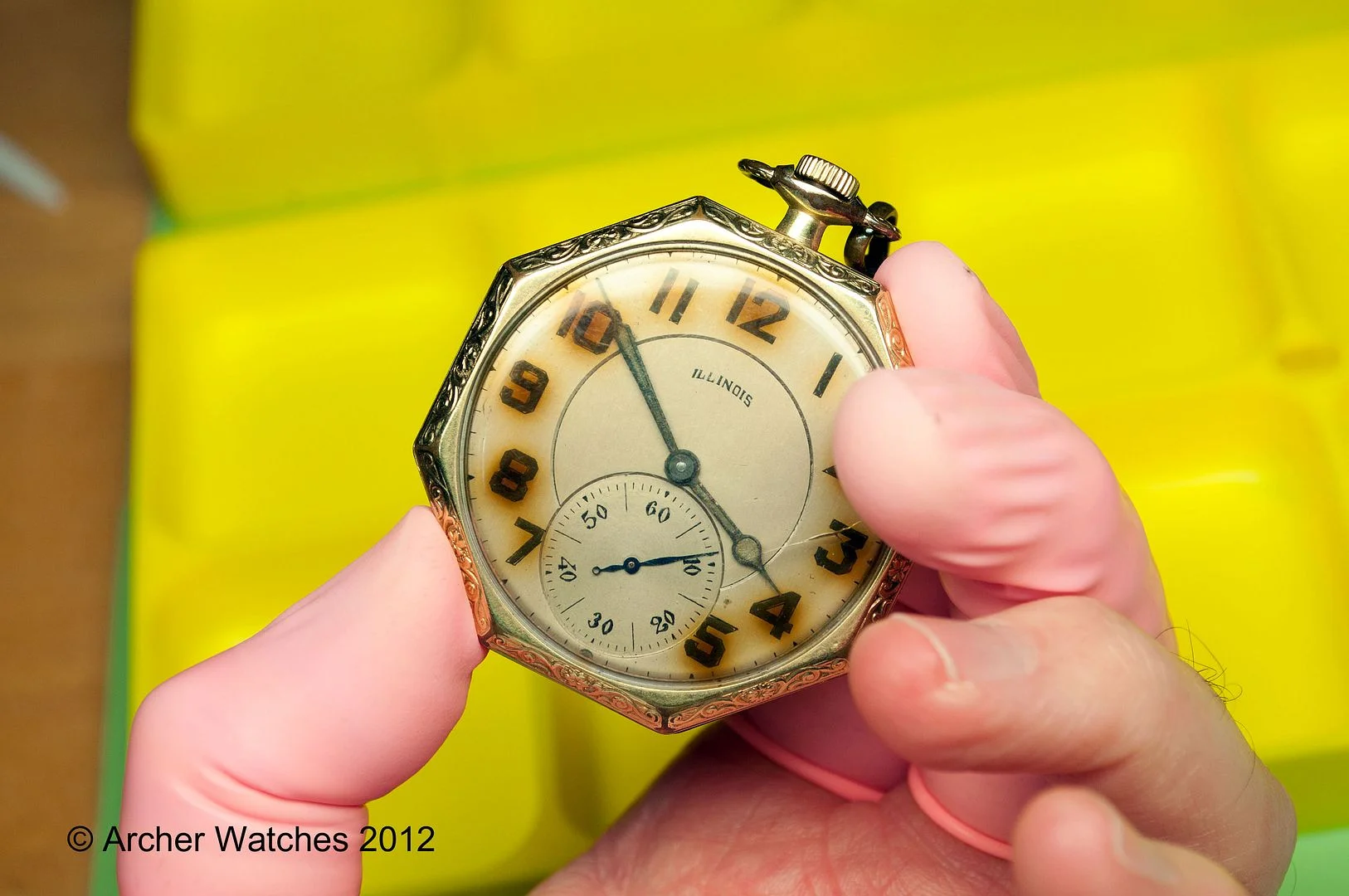
Now, is this something you need to worry about if you’re buying these things as a private individual? Not really…right up until the moment that QA/QC and material science bites you in the ass. If a seller is willing to make an Lie Of Omission, like telling you their wares are exempt either because they don’t know better or don’t care, please consider the amount of care they have put into making your sealed source. No source is meant to last forever and no I’m not just talking about them decaying away. They have a shelf life of how long until we expect until the most delicate part of encapsulating your source will fail and part of that is radiation damage. If you’ve ever seen an old watch or clock that looked like it had burns on the inside, that the old phosphor that been blown apart by the energy of radium decay, possibly damage to glass face itself. For those of you that have regularly handled the plastic button sources, have you seen a little bit of discoloration in the very center of the sticker label or the plastic on the other side? That’s also radiation damage and you might want to check how old your source is and how to get rid of it if it’s time for it to go before it fails on you.
When your “exempt” sealed source fails because you did something outside the scope of normal use, or you paid for someone else’s 50 year old trash, or it just wasn’t made well in the first place, you are the responsible person who doesn’t have a radioactive materials license, not the manufacturer. You will be on the hook for all the fines, clean up costs, and potential lawsuits.
That was probably scary for some of you to think about. Happy Halloween!